


Alaska Summit signal broader US-Russia reconciliation
by Mathipa Phishego
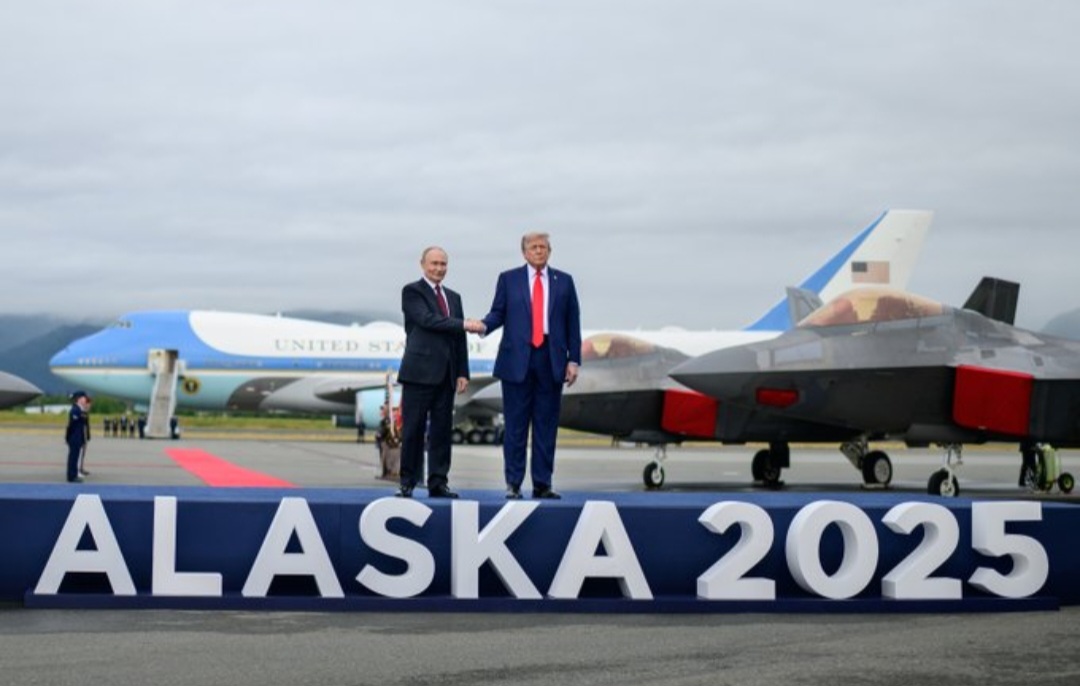
A striking change in visual and language at Alaska Summit on August 15. But unmistakable defined this week’s high-stakes Alaska summit between U.S. President Donald Trump and Russian President Vladimir Putin.
While no grand bargain was signed nor dramatic handshake staged for the cameras. The symbolism, rhetoric, and post-summit moves point to something potentially far more significant.
The beginning of a broader geopolitical thaw. At the heart of the summit was a recalibration of timelines and tone.
While Western sanctions on Russia imposed over its 2022 full-scale invasion of Ukraine remain officially in place. Sources close to the negotiations confirmed that the sanctions calendar has quietly shifted.
Specific restrictions tied to energy and financial systems have been postponedfor phased review. A clear sign of behind-the-scenes coordination. Though no formal rollback was announced.
The financial markets responded swiftly with Russian bonds rallying. And European energy firms signaling tentative moves toward reopening joint ventures, that had been frozen since the onset of the war.
The choice of Alaska a symbolic midpoint between Moscow and Washington underscored the summit’s intent. Flanked by snowy peaks and glacial calm.
Setting was curated to suggest neutrality, detachment from conflict, and the promise of cooperation on shared challenges of climate change, Arctic security, and trade.
More notably, the language used during the closing statements hinted at something deeper. Economic reintegration, American officials spoke of building resilient supply chains and exploring areas of pragmatic overlap.
With Russian delegates nodding publicly to responsible coexistence. A phrase that while vague marks a rhetorical departure from the confrontation of recent years.
Yet, beneath the optics and diplomatic nuance. There is an unavoidable third player in this equation, Ukraine.
Several well-placed sources confirmed that any broader U.S.-Russia reconciliation scheme. Remains contingent on at least tacit Ukrainian consent and realistically, the ability of Washington to secure Kyiv’s acquiescence.
President Zelensky, still commanding strong domestic support and backed by key NATO allies, remains publicly firm on the non-negotiable conditions of full territorial integrity and accountability for war crimes.
However, Ukrainian diplomats have signaled openness to structured security guarantees and economic offsets. If the alternatives are geopolitical isolation or indefinite war.
Whether this summit marks a fleeting moment of détente depends on actions over the coming months. U.S. officials will need to walk a tightrope between engagement and betrayal.
Ensuring Ukraine is not sacrificed at the altar of realpolitik. While also acknowledging that global stability may require uncomfortable compromises.
For Russia, the calculus is clear, economic survival depends on normalization. The Alaska summit did not produce a breakthrough.
But in the realm of high diplomacy, sometimes silence, staging, and softened language speak loudest.