


Sexual Harassment Allegations Shake Afrika Mayibuye Movement
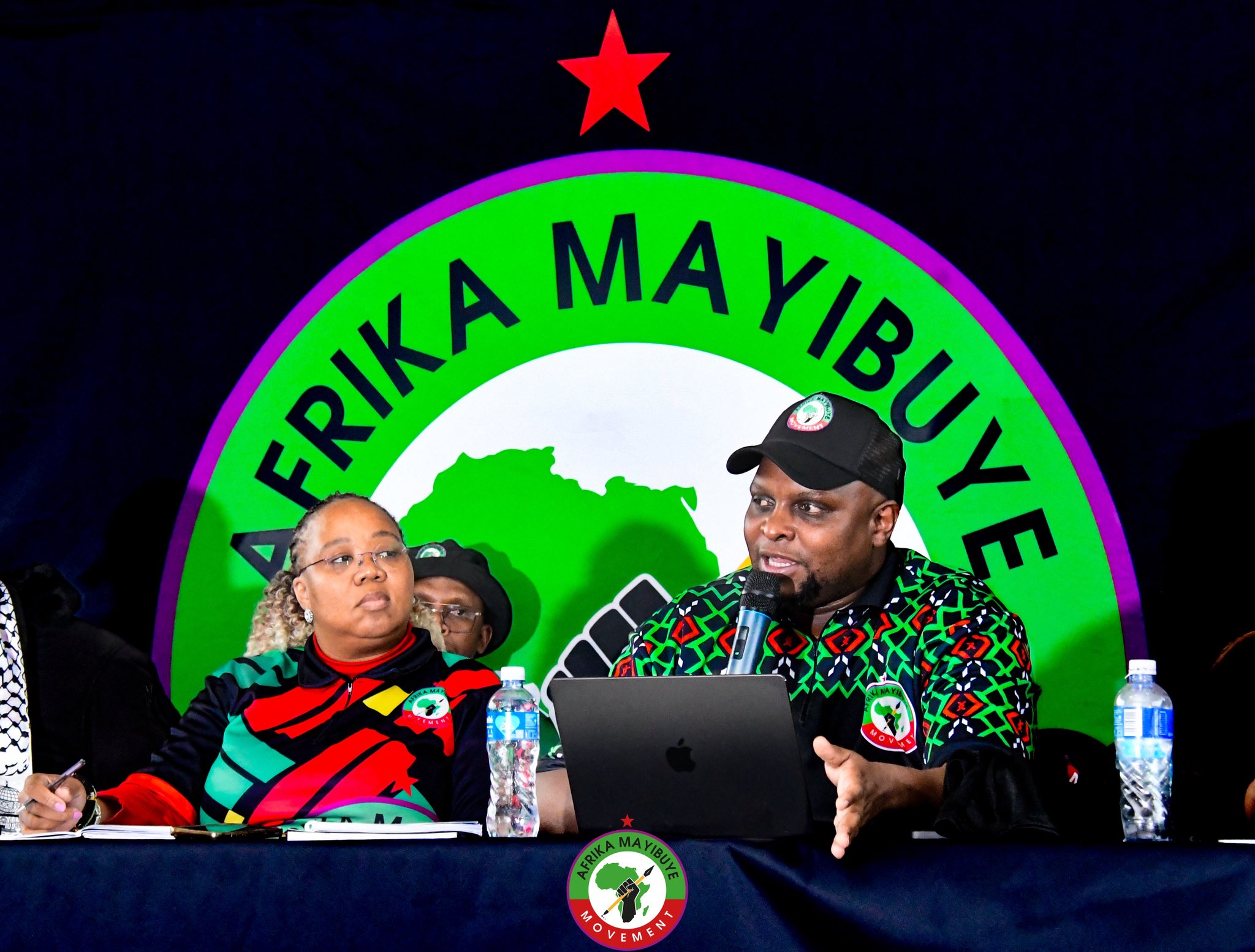
Africa Mayibuye president and deputy lock horns. (Nolubabalo Mcinga via X)
by Mathipa Phishego
Sexual harassment allegations has erupted within the newly launched political party Afrika Mayibuye Movement, led by former deputy-president of the Economic Freedom Fighters (EFF) Floyd Shivambu, as serious allegations of organisational sexual harassment, defamation and internal intimidation are laid bare by one of the party’s founding deputy presidents.
Deputy President and Co-Founder Nolubabalo Mcinga (also known among her traditional community as Queen Khazeka) publicly denounced what she describes as a coordinated campaign of exclusion and smear tactics on 18 October 2025. She clarified that while she is not accusing Shivambu of direct physical misconduct, she is alleging systemic abuse organisational sexual harassment via defamation, isolating her from party structures and undermining her role.
Mcinga claims she was removed from internal communication channels, received a letter of allegations on 11 October which she responded to, and is now facing personal financial and professional collapse as a result of the party’s actions.
Beyond politics, Mcinga alleges that the effects of the party’s internal treatment of her have spilled into her personal life. She says her daughter was expelled from university because fees were unpaid, her son is facing struggles at school, and car was repossessed.
She reportedly stated that she was stripped of her VIP protection and travel allowances. “The party failed to honour salary commitments,” she said, adding that she found herself vulnerable and unsupported.
Afrika Mayibuye was officially launched in September 2025 with high ambitions to contest the 2026 local government elections, declaring itself a revolutionary alternative for South Africans disenchanted with conventional politics.
Shivambu, in forging this new movement, appointed Mcinga and one other deputy president at launch. Yet almost immediately a wave of internal friction emerged. Social media posts spotlighting power tensions, rumours of tribalism and discontent among early members.
Mcinga’s intervention has now exposed a deeper layer of conflict not just leadership rivalry, but accusations of systematic undermining of female leadership within the party. The allegations present serious reputational risks for Afrika Mayibuye. The very rhetoric of women’s empowerment and transformational politics that the party used to distinguish itself is now under scrutiny from within.
The public note that the emergence of such discord so early in the party’s life may hamper its credibility, unity and electoral prospects. According to Central News, the party spokesperson, named as Sydney Baloyi, confirmed that internal issues are being handled but offered no further detail.
The absence of a fuller public response from Shivambu has only deepened speculation. Mcinga has pledged to hold the party accountable and refused to be silenced. In one public post she wrote, “I wish Mayibuye could adopt the spirit of questioning and owning responsibility individually. Right now, everyone seems to wait for someone else to speak, even when they see something is wrong.”
With local elections looming, insiders say the movement must act quickly to avoid a full-blown split or public implosion. The coming days may prove crucial for both Mcinga’s position and the future cohesion of the party she helped build.