


Copper Crunch Hits South Africa as Scarce and Critical Metal is Global
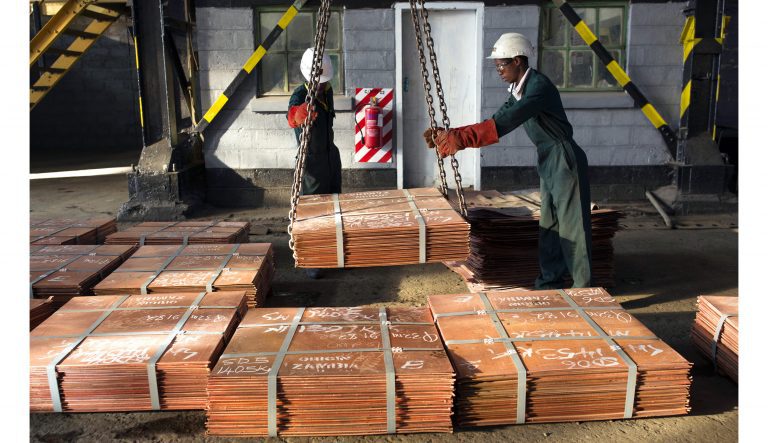
Copper is named as a critical mineral worldwide. (James Hall)
By Mathipa Phishego
InsideOutNews – South Africa is confronting a global copper squeeze that threatens to raise costs for national grid expansion, renewable roll-outs, and a fast-growing data centre industry. Just as global government policy formally elevates copper to “critical” status worldwide and local authorities push their own critical minerals agenda.
Experts warn the deficit could become a bottleneck for the global energy transition and digital ambitions unless supply chains, recycling and permitting accelerate.
A Global Shortfall with Local Consequences
A new S&P Global study forecasts copper demand will rise by roughly 50% to 42 million tons by 2040. While mine supply peaks near 33 million tons in 2030, leaving a 10 million-ton gap. Vice-Chair Daniel Yergin calls the situation a systemic risk for global industries as electrification, EVs, grids, AI and defense all scale at once. According to Bloomberg publication prices have already surged above R213 979,44/ton in London amid mine outages and stockpiling.
Meeting demand could require 80 new mines and R4,4 trillion in investment this decade, while ore grades decline and project timelines stretch up to 25 years. The refining bottleneck is stark, China produces over 45% of refined copper and imports about 60% of global copper ore, concentrating risk.
South Africa’s Policy Pivot
In May 2025, Cabinet approved the Critical Minerals and Metals Strategy, a framework to move beyond raw exports toward beneficiation, regional integration and resilient value chains. The document lists copper among minerals of moderate criticality. Still vital for energy transition technologies, while prioritizing local value-addition, grid infrastructure, and financing tools to unlock projects.
The strategy’s pillars geo-science mapping, localization, R&D, infrastructure and regulatory harmonization aim to reduce supply risks and capture more downstream value. Aligning with broader regional efforts in SADC to develop copper and related processing across DRC, Zambia and Namibia.
Eskom’s multiyear plan to add around 14,000 km of new high voltage lines, part of a programme costed near R440 billion faces. Rising materials costs as global demand for transmission gear surges. Executives caution that commodity price pressure may lift project costs, prompting consideration of local manufacturing and partnerships to stabilize supply.
While Eskom reports a more stable system and improved energy availability factor into 2026. Grid constraints still weigh on the build-out outlook. Reinforcing the need for private investment and faster permitting areas the national strategy seeks to address.
South Africa’s data centre market is expanding rapidly, with ~200 MW of upcoming IT load and R24,7 billion of planned investments by 2026, led by Johannesburg. These facilities require substantial copper for power distribution, cabling and cooling infrastructure. Analysts warn the AI class facilities are especially power intensive. Posing grid and materials challenges if copper prices remain elevated.
Major operators are hedging against energy risk. Teraco has committed to source 100% renewable power by 2035, including 120 MW of utility scale solar by 2026. A shift that will itself require copper‑heavy grid connections and battery systems.
Mining and Local Supply
On the supply side, Palabora Mining Company (PMC) in Limpopo signed a 12-year PPA to wheel 132 MWp of solar and a 360 MWh BESS into operations, South Africa’s first grid forming project. Cleaner power for copper production reduces operating risk and strengthens local supply security though national demand still far exceeds domestic output.
Copper 360, South Africa’s only listed primary copper producer, is ramping toward 5,000 t/year and modernising the O’Okiep district model to produce low-emission copper. Steps aligned with the national strategy’s localisation and beneficiation goals.
DRC and Zambia’s Surge
Neighbouring producers are pivotal to South Africa’s copper balance. Bloomberg reported that the price rally is a windfall for DRC and Zambia, whose output and reforms aim to more than triple Zambia’s production by the early 2030s. This tightens regional trade links into SA’s manufacturing and power sectors. South Africa already imports refined copper and wire from Zambia, trade data shows South Africa’s copper imports from Zambia reached US$127.5 million (R2,009 billion) in 2023.
Southern African Democratic Community (SADC) is pushing to expand Africa’s copper market through investment and trading reforms, with the Copperbelt’s growth likely to impact local pricing, logistics and availability for South African projects.
Logistics and Transportation
Any materials plan runs through rail and ports. Transnet’s turnaround and new public–private port deals were highlights of 2025. But capacity constraints and security issues still pose risks to timely imports of copper cathode and equipment. Analysts view 2026 as a test year for reform execution and equipment deployment to reduce congestion and stabilise mineral flows.
What Experts Say Must Happen Next
Accelerate permitting and domestic manufacturing to shield Eskom’s grid plan from price spikes and lead time shocks. Expand local production of conductors, transformers and switchgear where feasible.
Global studies show scrap could more than double by 2040 important for SA’s cable and electrical industries, but still insufficient to close the gap alone. Regional sourcing strategies deepens trade and logistics integration with DRC and Zambia to secure volumes and diversify refining routes, consistent with the national strategy’s regional pillar.
Demand-side efficiency and design innovation, data centre operators and grid planners should optimise copper intensity (fibre substitution in certain links, improved conductor design) without compromising reliability.
Copper’s scarcity is no abstract global headline, it cuts to the core of South Africa’s energy security, industrial strategy and digital future. From Mpumalanga grid connections to Limpopo copper smelting, the metal’s availability and price will shape project timelines and budgets. With policy momentum behind critical minerals and reform in logistics and power. The opportunity is to translate strategy into steel and copper reality before the shortage becomes a hard cap on growth.