


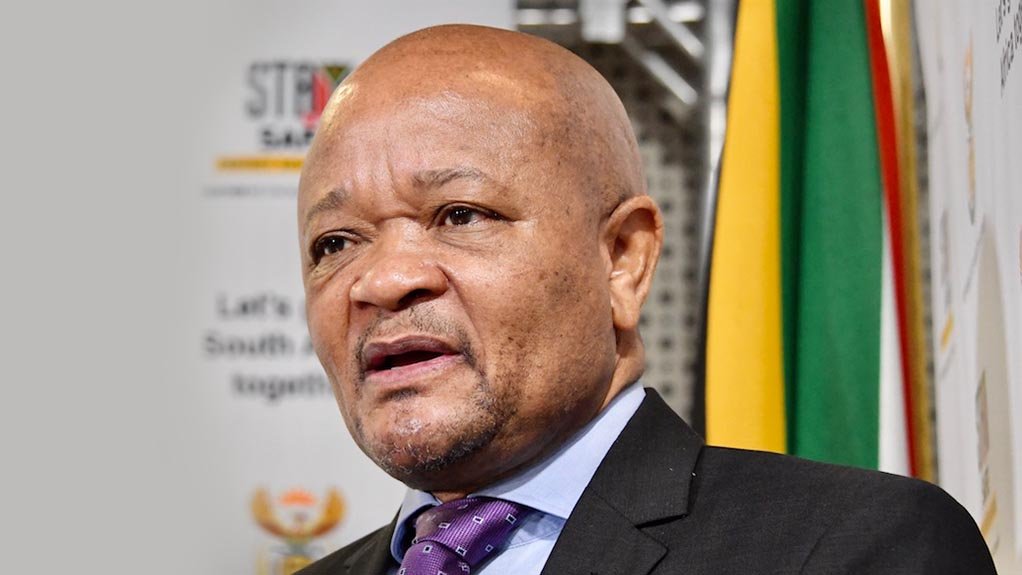
Acting Police Minister Cachalia slams Masemola’s move on political killings dockets
by Mathipa Phishego
Acting Police Minister Firoz Cachalia has sharply criticized National Police Commissioner General Fannie Masemola for what he described as a “premature and deeply problematic” decision to transfer 121 dockets related to political killings before the official inquiry into the matter has even begun.
Cachalia, who was appointed to oversee the police portfolio in an acting capacity earlier this year. Accused Masemola of undermining the integrity of the forthcoming inquiry by shifting the cases without transparency.
According to Newzroom Afrika, within the South African Police Service (SAPS), the dockets in question involve high-profile assassinations and attempted murders linked to political rivalries across KwaZulu-Natal, Mpumalanga, and the Eastern Cape.
“These are not ordinary cases. They go to the heart of South Africa’s democracy and the safety of public representatives. The Commissioner’s unilateral decision to move them raises questions of accountability, timing, and whether there are attempts to shield certain interests ahead of public scrutiny,” Cachalia said in a strongly worded statement.
The SAPS inquiry, expected to begin in the coming weeks was established after years of public pressure over the rising number of politically motivated killings. Particularly in KwaZulu-Natal where councillors, mayors, and party officials have been repeatedly targeted.
The inquiry is set to examine not only the capacity of the police to investigate these cases but also alleged interference, cover-ups, and complicity within the security cluster.
Cachalia suggested Masemola’s move could compromise evidence and create unnecessary suspicion at a time when public trust in law enforcement is already fragile.
He said, “instead of strengthening confidence, this action undermines it. South Africans deserve clarity and justice. Anything less would amount to betrayal.”
Opposition parties also seized on the matter, with the Democratic Alliance calling it “a troubling indication of SAPS’ culture of secrecy.”
Masemola has yet to publicly comment on the backlash, but the transfer was an administrative matter meant to streamline investigations ahead of the inquiry. However, such justifications fall short given the sensitivity of the cases and their political implications.
The clash between Cachalia and Masemola underscores growing tension within the upper echelons of SAPS. Where questions of accountability and political pressure remain unresolved.
“The Minister’s statement is unusually direct, and it signals a wider power struggle over how political killings are handled. The stakes are high not just for justice in these cases, but for the credibility of the police leadership,” said political analyst Dr Sibusiso Ndlovu.
With the inquiry looming, the controversy threatens to overshadow its launch and raises fears that families of victims may be further denied closure. For many, the episode reflects a deeper crisis of governance in South Africa’s law enforcement institutions.
Cachalia concluded by saying, “justice delayed is justice denied, and justice manipulated is no justice at all.”