


EFF Hails Victory as Student Debt Blacklisting Proposal Stalls
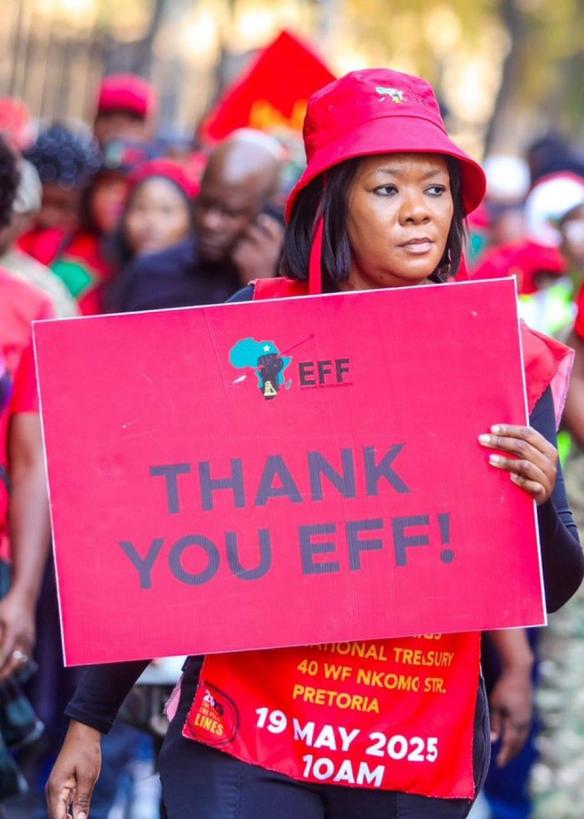
EFF stops the amendment of student debt blacklisting. (Khalanga Andrew)
Economic Freedom Fighters (EFF) Youth Leader Sihle Lonzi has declared a major victory for students and working-class families after government backtracked on proposed credit regulations that would have allowed unpaid student debt to be reported to credit bureaus.
Lonzi, who led the charge against the draft amendments to the National Credit Act, described the development as proof that organised resistance works. “This is a victory for poor and working-class students who refuse to be punished for seeking education. Blacklisting student debt would have destroyed futures before they even began,” Lonzi said.
In early September, the Department of Trade, Industry and Competition (DTIC) published draft regulations in the Government Gazette that appeared to permit higher education institutions to list unpaid student fees as credit debt. The proposal triggered outrage, with the EFF warning it would amount to a cruel and devastating attack” on poor youth.
Civil society groups, student movements, and opposition parties joined the chorus, arguing that many young people already face barriers to employment due to unpaid fees and cannot afford to carry the additional burden of blacklisting.
Following mounting pressure, Trade, Industry and Competition Minister Parks Tau moved to clarify the matter, insisting that the regulations were misinterpreted and not intended to prejudice students. He explained that the primary focus of the amendments was on expanding credit reporting for small businesses and juristic persons, not individual students.
Despite the clarification, the EFF has claimed the retreat as a political win, saying the ruling party would not have responded without sustained public pressure.
The party has used the moment to double down on its Student Debt Relief Bill, 2025, which seeks to cancel outstanding student debt for more than 300,000 graduates. Establish a Student Debt Relief Fund to assume liability from universities and colleges. Ensure students are not denied certificates or graduation because of unpaid fees.
According to Lonzi, this legislative intervention is the only sustainable solution. “We will not stop until all students are freed from the chains of financial exclusion. Education is a right, not a debt trap,” he said.
Student bodies across the country have celebrated the pushback, calling it a sign that government cannot ignore the plight of the poor. Many graduates remain unable to access jobs because institutions withhold certificates over unpaid fees.
The proposed regulation would have entrenched a cycle of poverty by ensuring that financially vulnerable students begin adulthood with a negative credit record.
While the government insists no student will be blacklisted, the EFF says vigilance is necessary. The party has vowed to monitor any future regulatory amendments to prevent a repeat attempt. Lonzi and the EFF are touting the moment as a hard-fought victory, positioning themselves as champions of youth and working-class struggles.
“This was not just about credit regulations it was about defending the dignity of young people who want nothing more than to learn, graduate, and build a better life. On this front, we have won,” Lonzi concluded.
The planned march against the amendment of blacklisting of students for October 3, still continues. The theme changes to job demand and debt cancellation.