

US-China trade talks resume in Stockholm amid hopes for 90-day truce extension
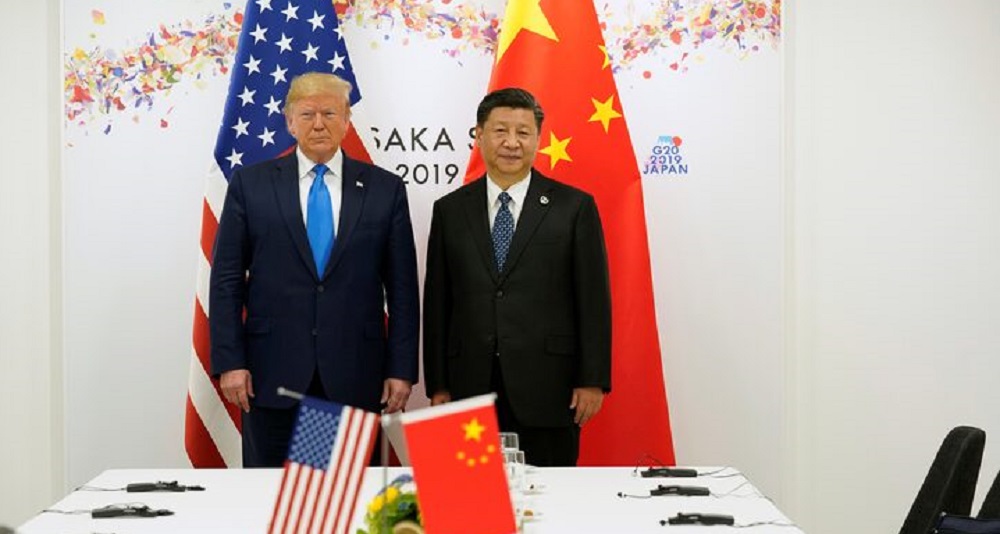
Picture from Reuters
by Kelebogile Matlou
Top economic officials from the United States and China will meet in Stockholm on Monday to resume talks aimed at easing long-standing trade tensions. The negotiations seek to extend a three-month truce in the ongoing trade war between the world’s two largest economies, and to avoid the return of high tariffs that could severely disrupt global trade.
China is facing a deadline of 12 August to strike a lasting tariff deal with the Trump administration. This follows earlier preliminary agreements made in May and June, which temporarily halted tit-for-tat tariffs and China’s suspension of rare earth mineral exports. If no deal is reached, the US is expected to reimpose triple-digit tariffs, which could effectively act as a trade ban, shaking global supply chains.
These talks follow the US’s major trade agreement with the European Union announced on Sunday, which includes a 15% tariff on most EU goods exported to the US, including vehicles. The EU also pledged to buy R13.7 trillion ($750 billion) in American energy and invest another R10.9 trillion ($600 billion) in the US in the coming years.
While a major breakthrough is not expected from the Stockholm talks, analysts believe a 90-day extension of the truce agreed in mid-May is likely. Such an extension would prevent an escalation in tariffs and allow for preparations for a possible meeting between US President Donald Trump and Chinese President Xi Jinping in October or November.
A spokesperson from the US Treasury declined to comment on a South China Morning Post report claiming that both sides had agreed not to impose new tariffs or take steps that could worsen the trade war for another 90 days. Meanwhile, the US is preparing new tariffs on Chinese sectors like semiconductors, pharmaceuticals, and ship-to-shore cranes, which could be introduced within weeks.
“We’re very close to a deal with China. We really sort of made a deal with China, but we’ll see how that goes,” said President Trump. Previous talks in Geneva and London during May and June focused on reducing triple-digit retaliatory tariffs and restoring trade in rare earth minerals and AI chips. However, discussions have yet to address the core economic disagreements.
These include US concerns about China’s state-supported export model, which it says floods global markets with cheap goods, and China’s criticism of US export controls on advanced technology, which it sees as an attempt to slow down Chinese growth.
Scott Kennedy, China economics expert, Center for Strategic and International Studies said that Geneva and London were really just about trying to get the relationship back on track
Kennedy believes an early deal on bigger issues is unlikely, but a 90-day ceasefire extension is the most realistic outcome. US Treasury Secretary Scott Bessent has already suggested extending the deadline and urged China to shift its economy from exports to local consumption, a US policy goal for years.
Speculation is growing about a potential meeting between Trump and Xi in October, but any new escalation in tariffs or export bans could derail those plans.
Sun Chenghao, a researcher at Tsinghua University’s Centre for International Security and Strategy, said a summit could lead to progres, Trump might agree to lower the 20% tariff on fentanyl-linked goods, while China could follow through on its 2020 promise to increase purchases of US farm products and other goods.
“The summit could help clear the way for a broader agreement,” said Sun Chenghao. However, analysts say China will likely push for a reduction of US tariffs, which now total about 55% on most Chinese goods, and demand an easing of US tech export restrictions. China argues that increasing its purchases from the US would help narrow the R5.4 trillion ($295.5 billion) trade deficit the US had with China in 2024.